


 Global - English
 Spanish - Español
 Arabic - عربي
 Italian - Italiano
 Polish - Polski
 French - Français
 Russian - Pусский язык
 Ukrainian - українська
 Chinese - 中文
 Korean - 한국어
 Turkish - Türkçe
 Vietnamese - Tiếng Việt


Electrical Control Modernization & Retrofits Solution
Electrical Control Modernization & Retrofits Solution
GT Electric modernizes electrical control systems for STS cranes, RTGs, portal cranes and other port equipment. Our services address aging controls, recurring faults, obsolete parts, high maintenance costs and integration challenges. Scope can include PLC and drive replacement, communication upgrades, E-house renewal, remote operation and energy-system integration—helping extend equipment life and improve reliability.
Features and Benefits
Business Overview
As cranes age, outdated control platforms, discontinued components, unreliable communications and slow maintenance response become increasingly costly. Repeated component-level repairs may no longer address the underlying reliability problems. A planned electrical control retrofit can restore performance, improve maintainability and prepare equipment for future upgrades.
We offer two main approaches: retain serviceable portions of the original system while replacing critical components, or rebuild the complete crane control architecture. Remote operation, intelligent safety and new-energy functions can be added where required, balancing investment with long-term equipment value.
Why Modernize Your Cranes?
Crane control systems may be among the first components to become difficult to maintain after years of service. Legacy PLCs, DC drive systems, first-generation VFDs and analog controls can be particularly challenging when spare parts are discontinued and documentation is incomplete.
1) Aging Controls & Unplanned Downtime
Exposure to moisture, salt spray and intensive operation can accelerate component aging and increase unplanned crane stoppages.
2) Scarce, Costly Imported Spares
Discontinued imported PLCs, drives, communication modules and control boards can have long procurement lead times and high replacement costs.
3) Limited Upgrade Options
Legacy architectures may lack interfaces for remote monitoring, automation, energy storage or advanced safety functions.
4) Difficult Maintenance & Slow Troubleshooting
Missing drawings, restricted program access and multiple equipment brands can make troubleshooting and repairs slower.
5) Insufficient Performance and Safety
Older systems may no longer meet operating needs for precise positioning, smooth speed control, synchronization, safety interlocks and diagnostics.
Applicable Equipment & Retrofit Scope
We modernize in-service port cranes and heavy equipment, selecting the scope according to crane structure, existing controls and operating priorities.
Suitable Crane Types
• Ship-to-shore (STS) container cranes (also known as quay cranes)
• Rubber-tyred gantry cranes (RTGs)
• Portal cranes
• Rail-mounted gantry cranes (RMGs)
• Ship unloaders and ship loaders
• Shipyard gantry cranes and other heavy lifting equipment
• Other port equipment with aging control systems
Typical Retrofit Scope
• Main PLC and remote I/O upgrades
• Conversion from legacy DC drive systems to AC variable-frequency drives
• Replacement of aging VFDs
• Complete renewal of control cabinets and E-houses
• Industrial network upgrades (PROFIBUS, PROFINET, EtherCAT and others)
• Encoder, limit-switch and sensing-device upgrades
• Operator cabin, console and HMI upgrades
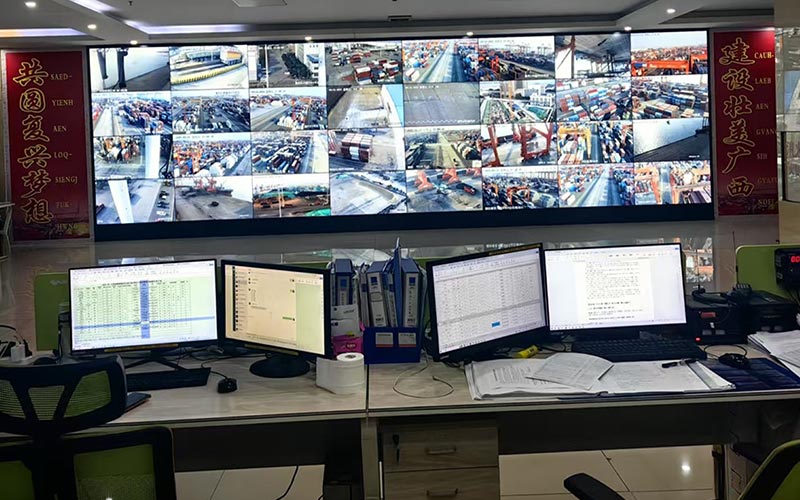
• Remote monitoring, remote control and automation features
• Hybrid power and battery system integration
Flexible Retrofit Strategies
Our retrofit plan can be staged to protect site safety, keep work within available shutdown windows and prioritize the improvements that deliver the most operational value.
Approach 1: Retain Serviceable Equipment, Replace Critical Components
Where the original PLC or field equipment remains serviceable, we can replace drives, communications modules, I/O stations, encoders and critical controls while retaining compatible elements. This can reduce cost and installation risk.
Approach 2: Rebuild the Complete Control System
For severely degraded or discontinued platforms, or projects seeking a standardized, locally supported architecture, we can replace the main PLC, drives, cabinets, E-house and network to improve system reliability and maintainability.
Approach 3: Add Remote, Smart and Energy Functions
A control retrofit can also introduce remote monitoring, remote operation, battery or hybrid power, intelligent safety functions and maintenance management—creating a platform for further automation and electrification.
Ship-to-Shore Crane Control System Modernization
STS cranes require reliable synchronization, fast response and robust safety interlocks for continuous quayside handling. We modernize hoists, gantry and trolley travel, boom motion, spreader controls and distributed I/O, addressing legacy platforms from manufacturers such as GE, ABB and Liebherr, aging DC drives and unstable communications.
Depending on the crane, cabinets may be replaced or retained and upgraded. Examples of legacy architectures include GE DC2000 with Series 90-30, ABB DCV700 with AC410, and Liebherr analog drives with Siemens S5. Replacement with modern Siemens, ABB or other platforms can include absolute encoders, remote I/O, revised logic and wiring to improve precision and diagnostics.
• Upgrade aging DC control to modern digital systems
• Replace entire cabinets or modernize existing enclosures
• Add absolute encoders for improved positioning
• Modernize legacy GE, ABB and Liebherr control platforms
• Designed for demanding continuous STS crane operation
RTG Control System Modernization
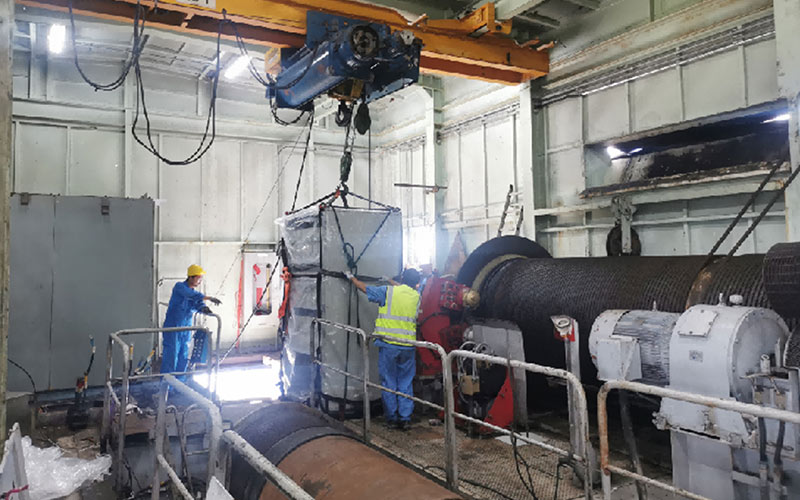
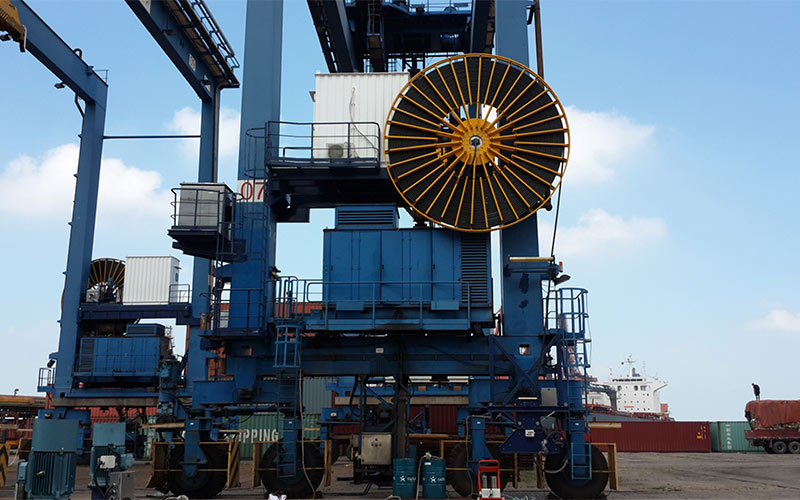
Our RTG retrofits address aging E-houses, obsolete drives, I/O failures, unreliable communications and mismatched cab or spreader interfaces. Services can include E-house replacement, drive and PLC upgrades, rewiring, on-site integration tests and performance optimization.
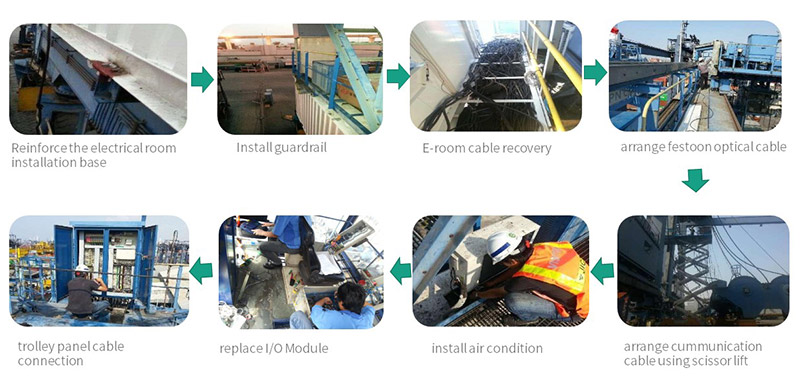
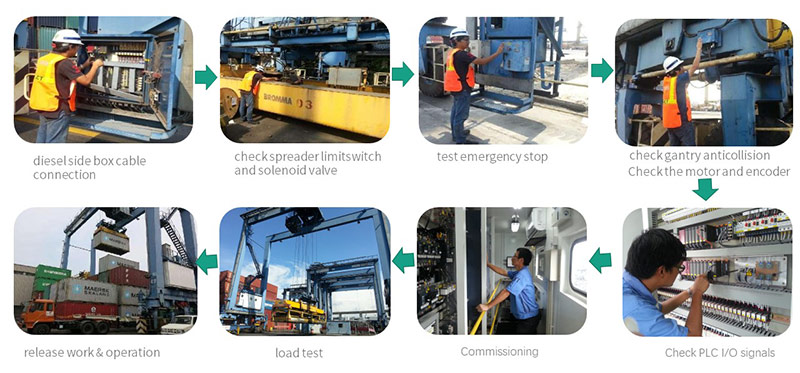
When required, we remove the existing E-house and install a new unit. Control cabinets, braking units, drives, I/O and networks are upgraded, while encoders, limit switches, spreader signals, emergency stops and anti-collision functions are checked and tested before the crane returns to service.
• E-house replacement and structural base reinforcement
• Integrated drive, PLC, I/O and network upgrades
• Fiber-optic and industrial communication cable replacement
• Joint commissioning of spreader controls, sensors and safety circuits
• Integration with hybrid power or battery upgrades
Integrated Energy-System Retrofits
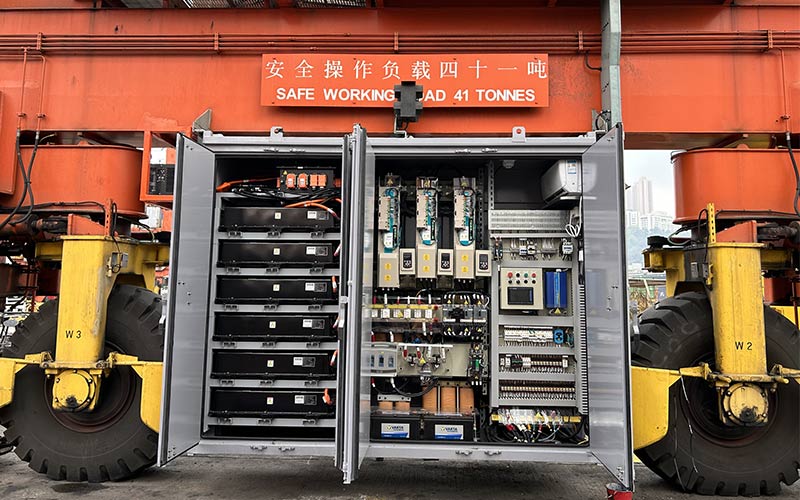
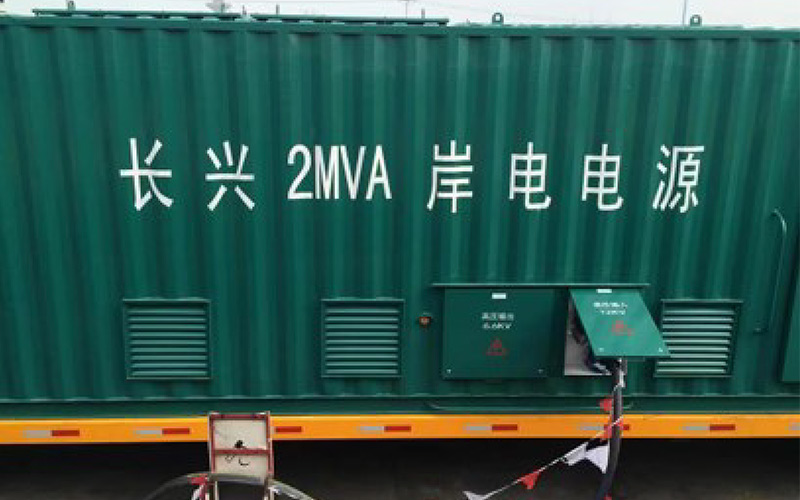
An electrical control modernization can be combined with installation of a hybrid power enclosure, battery system, DC/DC converters, BMS, EMS and auxiliary power supply. This brings the control system and energy system into one coordinated project.
Replacing an existing diesel generator in the 400 kW class with a smaller generator and a high-power battery can reduce fuel use and maintenance demand while recovering energy from load lowering. Where grid connections are available, options can also include diesel-to-electric conversion, battery-powered repositioning and peak-shaving control.
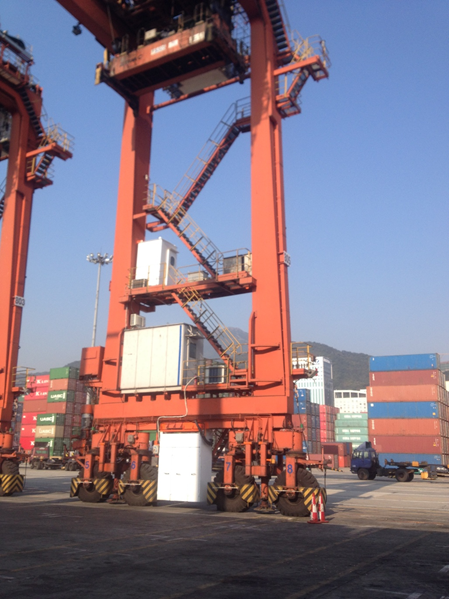
Modernization: Before & After
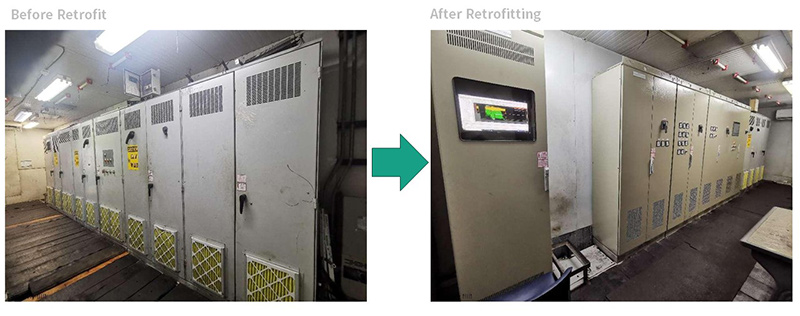
The value of modernization extends beyond restarting aging equipment. Upgrading controls, drives, sensors, networks and electrical infrastructure can improve performance, diagnostics, serviceability and future expansion, moving a crane from fragmented legacy systems to a modern digital platform.
Before Modernization
• Aging controls and frequent failures
• Imported spare parts that are difficult to source
• Fragmented logic and complex maintenance
• Inadequate positioning accuracy and response speed
• Limited remote diagnostics or expansion options
After Modernization
• More consistent, reliable control architecture
• Easier spare-parts sourcing and faster maintenance
• More accurate, coordinated crane movements
• Clearer alarms and fault diagnostics
• A foundation for remote operation, automation and electrification
Project Delivery Process
Crane modernization often takes place within short shutdown windows, around complex equipment and overlapping on-site activities. Our project management process coordinates engineering, installation, testing and handover to reduce disruption and maintain site safety.
1) Survey and Assessment
Assess equipment condition, existing architecture, recurring faults, site conditions and available shutdown time to establish the retrofit scope.
2) Design and Planning
Prepare control architecture, component selection, network design, installation methods, cutover plans and commissioning schedules.
3) Integration & Factory Pre-Testing
Integrate cabinets, E-houses, operator consoles and key control components in the workshop, with pre-installation testing to reduce on-site uncertainty.
4) Field Removal and Installation
Remove or retain existing equipment as planned; install enclosures, reinforce foundations where necessary, route cables and reconnect I/O and field devices.
5) Commissioning & Load Testing
Commission PLCs, drives, encoders, limit switches, spreaders, emergency stops and anti-collision functions, followed by unloaded and loaded operation tests.
6) Handover and Training
Complete trial operation, acceptance documentation and operator or maintenance training before final handover.
Engineering & Delivery Capabilities
From the initial survey to commissioning and acceptance, we coordinate engineering and on-site execution to deliver dependable retrofits under challenging operating conditions.
1) Planning
Retrofit planning based on crane condition, customer priorities and site constraints.
2) System Integration
Engineering and assembly of PLC systems, drives, cabinets, E-houses and remote I/O stations.
3) Design Optimization
System optimization for cabling, networks, encoder feedback, motion control and safety circuits.
4) Field Organization
On-site schedule, resource, quality and safety coordination, including rapid issue resolution.
5) Technical Service
Programming and commissioning across different PLC and drive brands, integrated testing and customer training.
Selected Project References
Our project references include STS crane control modernization at ports in Indonesia, the Philippines, the Bahamas, Pakistan and China. The projects involve upgrades from legacy GE, ABB and Liebherr architectures to modern Siemens, ABB and other digital control systems.
• JICT (Jakarta): GE DC2000 + 9030 → Siemens 6RA70 + Fuji SPH-SX
• SICT (Shantou): GE DC2000 + 9030 → Siemens 6RA70 + GE RX3i
• KOJA (Jakarta): ABB DCV700 + AC410 → ABB DCS800 + AC800M
• Manila North Port: GE DC2000 + 9030 → Siemens 6RA70 + S7-300
• YICT (Yantian): GE DC2000 + 9030 → Siemens 6RA70
• KICT (Karachi): Liebherr analog drive + S5 → ABB DCS800 + AC800M
• Chiwan: GE DC2000 + 9030 → Siemens 6RA70 + S7-400
• FCP (Bahamas): GE DC2000 + 9030 → Siemens 6RA80 + S7-1500
Our RTG retrofit experience spans legacy drive and control combinations from Fuji, ABB, Siemens, Yaskawa, Control Techniques and GE, including compatibility engineering and planned cutovers between control platforms.
• JICT: Siemens 6SE70 + S5 → Fuji VG1S + SPH-SX
• YICT: ABB ACS600 + AC800M → Inovance + S7-300
• XICT: Fuji VG7 + F70S → Yaskawa CH700 + Fuji SPH-SX
• HIT: Yaskawa VS585 → Control Techniques Mentor MP
• COSCO-HIT: Yaskawa VS585 + CP-3300 → Control Techniques Mentor MP + GE RX3i
• Tonghai: Siemens 6SE70 → INVT GD350
• XHCT: Siemens 6SE70 + S7-300 → upgraded control platform
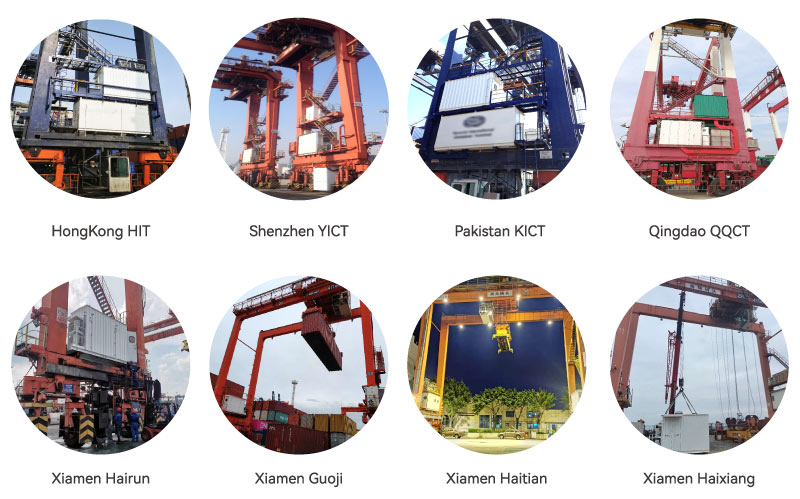
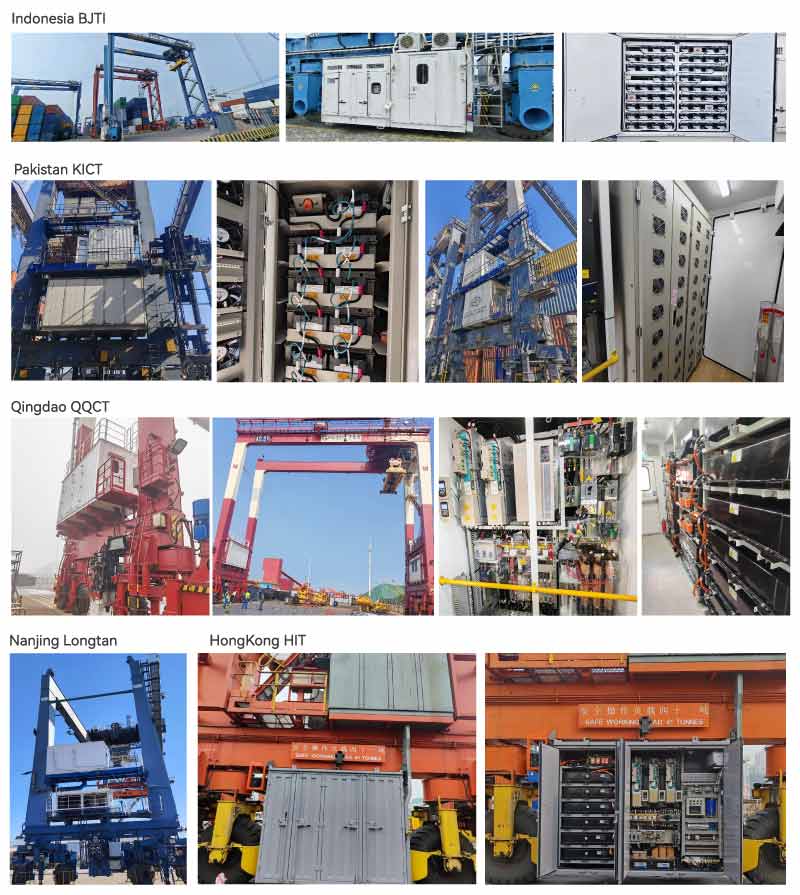
Our RTG hybrid power project references include HIT in Hong Kong, YICT in Shenzhen, KICT in Karachi, QQCT in Qingdao, Nanjing Longtan and terminals in Xiamen. These installations demonstrate our experience in integrating battery and hybrid systems across operating environments.
• HIT (Hong Kong): More than 49 units since 2009
• YICT (Shenzhen): More than 26 units
• KICT (Karachi): More than 26 units
• QQCT (Qingdao): More than 11 units
• Nanjing Longtan: 26 units
• Xiamen terminals: Projects covering 16 and 30 units
Customer Benefits
A systematic control retrofit can extend crane service life, reduce operating risk and maintenance costs, and lay the groundwork for future automation and energy-system upgrades.
• Extend the useful life of existing cranes
• Reduce faults and unplanned downtime
• Lower dependency on imported spares and repair costs
• Improve accuracy, productivity and safety
• Prepare existing cranes for remote operation and electrification
• Support standardized control systems and easier long-term maintenance
• Unlock more value from existing equipment
Looking Ahead
We will continue developing control upgrades, drive replacements, network modernization and integrated remote and energy systems, helping port operators extend equipment life and improve long-term reliability.



 Leave a Message