


 Global - English
 Spanish - Español
 Arabic - عربي
 Italian - Italiano
 Polish - Polski
 French - Français
 Russian - Pусский язык
 Ukrainian - українська
 Chinese - 中文
 Korean - 한국어
 Turkish - Türkçe
 Vietnamese - Tiếng Việt


Shore Power Systems Solution
Shore Power Systems Solution
GT Electric provides high- and low-voltage shore power systems that supply electricity to vessels while at berth. Using power conversion, intelligent control and standardized ship-to-shore connections, the systems adapt grid power to a vessel's voltage, frequency and phase-sequence requirements. By allowing ships to reduce use of auxiliary diesel generators, shore power can lower berth-side emissions and noise, subject to vessel and grid conditions.
Features and Benefits
Business Overview
Shore power—also known as onshore power supply (OPS) or shore-to-ship power—allows vessels to draw electricity from the port grid while berthed. Transformers, frequency converters, isolation equipment and safety controls match the shore supply to shipboard requirements, helping power communications, lighting, accommodation and other auxiliary loads without continuously running onboard diesel generators.Drawing on our experience in port electrical control, power electronics and system integration, we provide power conversion, shore connection equipment, ship–shore interlocks, metering, monitoring and maintenance functions. Each configuration is designed around vessel types, berth layouts and local grid conditions.
Core Value
Shore power is an important part of terminal electrification. Reducing auxiliary engine use at berth can improve local air quality and noise conditions, while helping vessel operators manage fuel consumption and meet applicable requirements. The overall environmental benefit depends in part on how the electricity is generated.
1) Reduced Berth-Side Emissions
By replacing onboard auxiliary generator operation, shore power can reduce sulphur oxides (SO₂), particulate matter and other emissions at the berth; lifecycle results depend on the grid energy mix.
2) Less Noise, Better Working Conditions
Reducing auxiliary generator operation can also lower continuous low-frequency noise for terminal workers and nearby communities
3) Potential Operating Cost Savings
Lower use of onboard fuel, lubricants and auxiliary engines can reduce operating and maintenance expenses, depending on local electricity and fuel prices.
4) Longer Equipment Service Life
Reduced generator running hours and fewer starts and stops can lower wear and maintenance requirements
5) Support for Port Decarbonization
Shore power supports cleaner terminal operations and can form part of a wider electrification and smart-port strategy.
Regulatory Context & Project Planning
Shore power requirements are becoming more prominent in port development and vessel operations. Specific connection, usage, design and acceptance requirements vary by jurisdiction, vessel type and berth, so each project should be designed and checked against the rules that apply locally.
• Connection requirements may apply to eligible ships at certain coastal berths after defined durations
• Inland-waterway ports may have additional or different usage requirements
• New terminal projects may need to coordinate shore power planning, construction and commissioning
• Existing terminals may be required to retrofit facilities under local implementation plans
• High-voltage shore power projects require appropriate testing, inspection and acceptance
System Architecture
Our shore power architecture brings together grid intake, voltage and frequency conversion, berth connection equipment, monitoring and protection. The system is configured for safe, dependable operation in demanding terminal environments.
1) Port Grid Connection
Connects to a 10 kV or 35 kV port grid or substation, with distribution units, transformers and reactive power compensation as required.
2) Power Conversion Room
Houses high-power converters that match the voltage, frequency and phase sequence required by the receiving vessel.
3) Berth-Side Connection Equipment
Shore power connection boxes, standardized connectors, cable management and junction boxes support safe, efficient ship–shore connection.
4) Monitoring, Metering & Protection
PLC controls, electricity meters, protective devices and monitoring platforms provide operating visibility, energy measurement, fault handling and safety interlocks.
Power System Configurations
Low Voltage → Low Voltage → Low Voltage (LV–LV–LV)
Low-voltage input, conversion and output provide a simple, economical option for smaller vessels and lower-power applications, where site conditions permit.
High Voltage → Low Voltage → Low Voltage (HV–LV–LV)
High-voltage grid input is stepped down for low-voltage frequency conversion and low-voltage ship supply. This approach can suit berths located farther from substations when vessels require low-voltage input.
High Voltage → Low Voltage → High Voltage (HV–LV–HV)
High-voltage input is stepped down for low-voltage conversion, then stepped up for shipboard high-voltage supply. This is an established option for higher-power applications, including large container vessels and cruise ships.
High Voltage → High Voltage → High Voltage (HV–HV–HV)
High-voltage input, frequency conversion and output avoid an intermediate low-voltage stage. The configuration is suited to large-capacity applications where reduced conversion-stage losses and high power density are priorities.
Safety by Design
Because shore power connects two independent electrical systems, safety must be managed from connection and synchronization through operation and disconnection. Our designs include electrical isolation, ship–shore interlocks, insulation monitoring and layered electrical protection.
1) Electrical Isolation
Isolation transformers electrically separate ship and shore systems, helping manage galvanic corrosion and electric shock risks.
2) Ship-Shore Interlock
Hardware interlocks and emergency-stop logic prevent energization until both sides are ready and allow power to be disconnected if unsafe conditions occur.
3) Insulation Monitoring
Continuous insulation monitoring detects leakage and ground faults and supports fast protective action according to system configuration.
4) Multiple Electrical Protection Functions
Protection may cover overvoltage, undervoltage, overcurrent, short circuits, reverse power, abnormal frequency and harmonic control to protect the vessel, equipment and supply network.
Technical Features
Our power electronics and control algorithms support configurable voltage and frequency, power quality, scalable capacity and dependable operation across vessel and berth requirements.
1) Independent Voltage/frequency control and Phase-Sequence Matching
Voltage and frequency can be configured separately for different shipboard systems. Phase-sequence identification supports faster, more accurate connection setup.
2) Precision Closed-Loop Voltage Control
PID-based closed-loop control reduces output-voltage variation and improves response to sudden load changes.
3) Scalable Parallel Converter Operation
Multiple power units can be operated in parallel to increase capacity, introduce redundancy and support smooth transfer between units, from kilowatt- to megawatt-scale projects.
4) High-Carrier-Frequency, Five-Segment Switching Control
Optimized switching patterns improve output waveform quality, help reduce harmonics and switching losses, and support efficient, long-term operation.
Key Components and Equipment
A complete GT Electric shore power system is built from the following main units.
1) High-Voltage Shore Power Equipment
High-voltage input switchgear, Frequency converters, isolation transformers and output switchgear for large-scale shore connection projects.
2) Low-Voltage Frequency Conversion Equipment
Low-voltage voltage/frequency conversion equipment for LV shore power, HV–LV–LV and HV–LV–HV configurations.Low-voltage voltage/frequency conversion equipment for LV shore power, HV–LV–LV and HV–LV–HV configurations.
3) Control & Protection Equipment
PLC cabinets, monitoring systems, energy meters, insulation monitoring and electrical protection devices.
4) Berth-Side Connection System
Shore power connection cabinets, junction boxes and standardized connectors for safe, convenient ship–shore connection.
Selected Project References
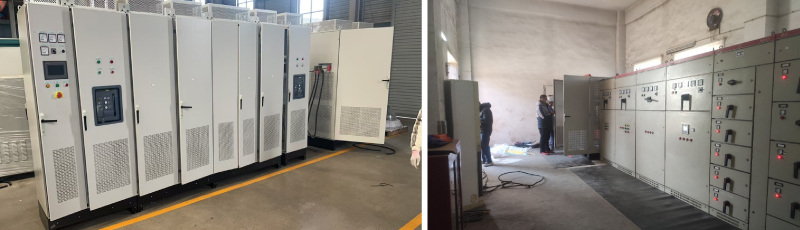
• Project 1: Yangzhong Bianjiagang, 450 V / 2,500 kVA shore power supply
A packaged cabinet system combining multiple rectifier and inverter modules for terminal shore power.
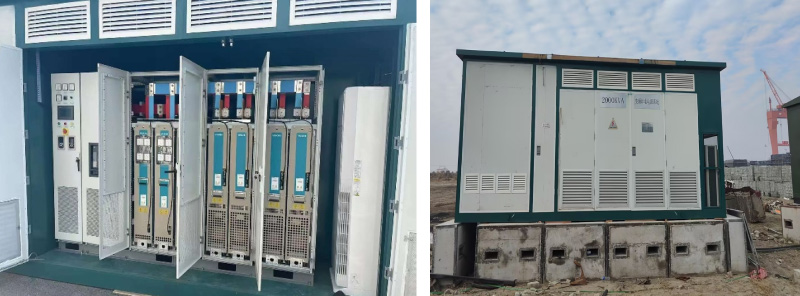
• Project 2: 690 V / 2,000 kVA shore power supply
A modular power conversion design for medium- and large-scale low-voltage applications.
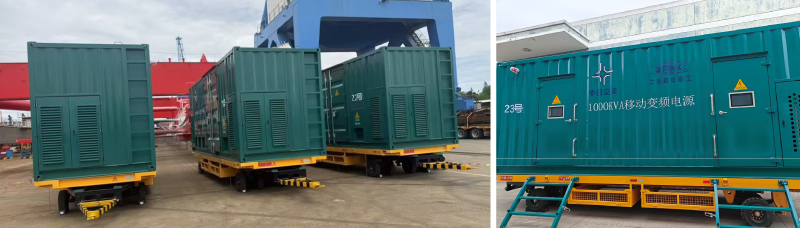
• Project 3: 1,000 kW mobile low-voltage shore power unit
An integrated mobile shore power unit designed for flexible deployment at berths and reduced onboard auxiliary-engine use.
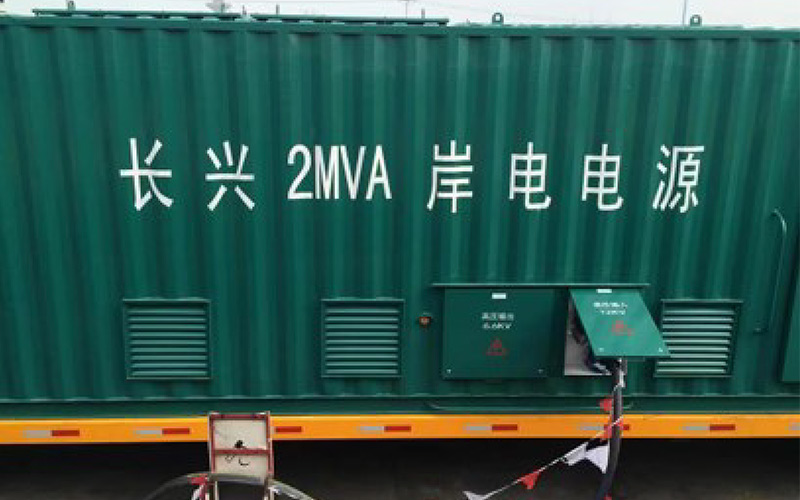
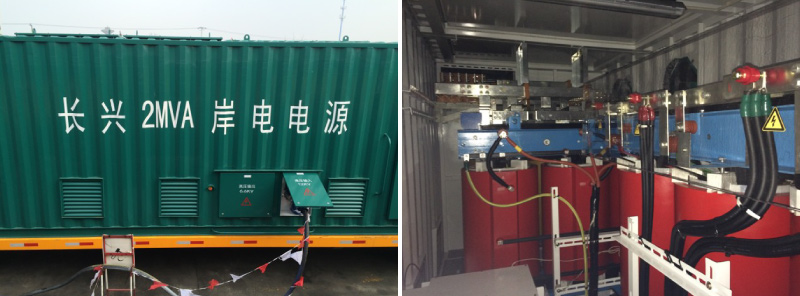
• Project 4: ZPMC Changxing Base, 2,000 kW high-voltage shore power project
An integrated high-voltage system designed to supply larger vessels, demonstrating our high-power system delivery capabilities.
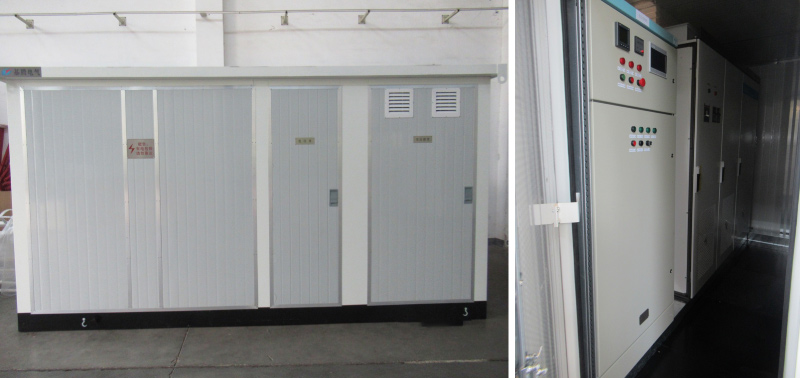
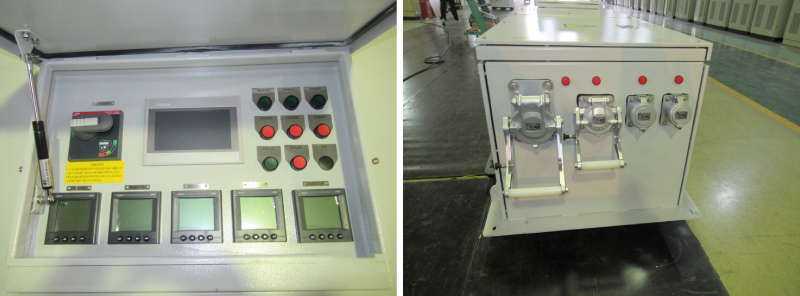
• Project 5: Xiamen outdoor shore power supply and berth-side junction boxes
Prefabricated outdoor electrical enclosures and smart berth-side junction boxes support local vessel connection, energy metering and stable supply.
Customer Benefits
Our shore power systems help ports advance cleaner operations while improving power management and berth-side services. Stable conversion, monitoring and connection systems support safe operation and practical long-term asset management.
Looking Ahead
We will continue refining high- and low-voltage shore power, frequency conversion, safety interlocks and system integration to provide dependable, flexible solutions for ports and terminals worldwide.




 Leave a Message